Executive Function Skills - CHADD
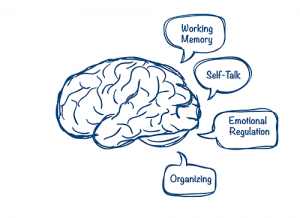
Executive function refers to brain functions that activate, organize, integrate and manage other functions. It enables individuals to account for short- and long-term consequences of their actions and to plan for those results. It also allows individuals to make real-time evaluations of their actions and make necessary adjustments if those actions are not achieving the…
Overview
Added
March 8, 2026
Related situation
Audience
parent
Grade range
Grade 9 (Freshman)–Grade 12 (Senior)
Page kind
Article
Introduction
Understanding Executive Function Skills
- Definition: Executive function refers to the brain's ability to activate, organize, integrate, and manage other cognitive functions, enabling planning, foresight, and real-time self-adjustment.
- Connection to ADHD: Executive function impairments are considered highly interrelated to ADHD symptoms, particularly regarding the inability to self-regulate and delay responses.
- Russell Barkley’s Model: Focuses on the root cause being an inability to self-regulate. He categorizes executive function into four areas:
- Nonverbal working memory
- Internalization of speech (verbal working memory)
- Self-regulation of affect, motivation, and arousal
- Reconstitution (planning and generativity)
- Tom Brown’s Model: Proposes six integrated "clusters" of executive function; impairments in these areas often appear together:
- Organizing, prioritizing, and activating for tasks
- Focusing, sustaining, and shifting attention
- Regulating alertness, sustaining effort, and processing speed
- Managing frustration and modulating emotions
- Utilizing working memory and accessing recall
- Monitoring and self-regulating action
- Impact: Deficits in these areas significantly hinder an individual's ability to initiate, maintain focus on, and complete tasks.
Official site and publisher details from listings appear below before you open the site.
Website
- Site
- CHADD
Community reviews
No published reviews yet. Be the first to share your experience.