Physics Girl | How SMOOTHNESS of a SOCCER BALL affects curve | Season 1 | Episode 25 | PBS
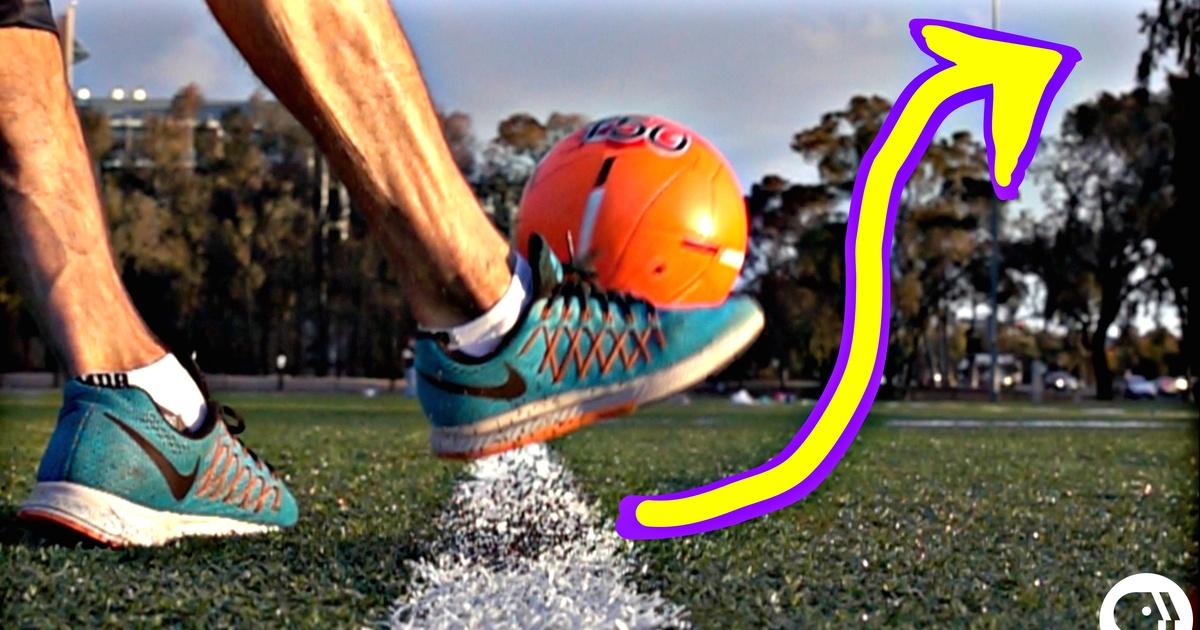
Curving and bending a ball using the magnus effect is common in every sport.
En bref
Ajouté le
25 mars 2026
Situation associée
Public
parent
Niveaux scolaires
9e année (3e)–12e année (Terminale)
Type de page
Video
Introduction
The Physics of the Reverse Magnus Effect
- The Magnus Effect: A phenomenon in fluid dynamics where a spinning object (like a soccer ball) curves in the direction of its spin due to the interaction between the ball's surface and the surrounding air.
- The Reverse Magnus Effect: A counterintuitive occurrence where a ball, kicked with the same spin as a standard shot, curves in the opposite direction.
- The Role of Surface Roughness:
- Standard soccer balls are rough, which typically creates a turbulent boundary layer of air, resulting in the standard Magnus effect.
- Extremely smooth balls can cause the boundary layer to become laminar (smooth and orderly), which triggers the reverse effect.
- Boundary Layer Dynamics:
- Laminar flow: Smooth, orderly air flow; separates from the ball surface more easily.
- Turbulent flow: Chaotic air flow; sticks to the curve of the ball more effectively.
- The reverse effect occurs when the boundary layer on one side of the ball becomes laminar while the other remains turbulent, causing the air to deflect in a way that pushes the ball in the opposite direction of a standard curve.
- Experimental Findings:
- Experiments at MIT demonstrated that adding a simple rubber band to a smooth ball (like a beach ball) can flip the Magnus effect back and forth.
- Data analysis using "Tracker" software showed that the acceleration caused by the Magnus effect on lighter balls can be comparable to the force of gravity.
- Key Contributors: Diana Cowern (Physics Girl) and aerospace engineer Nicole Sharp (FYFD).
Avis de la communauté
Pas encore d’avis publiés. Soyez le premier à partager votre expérience.