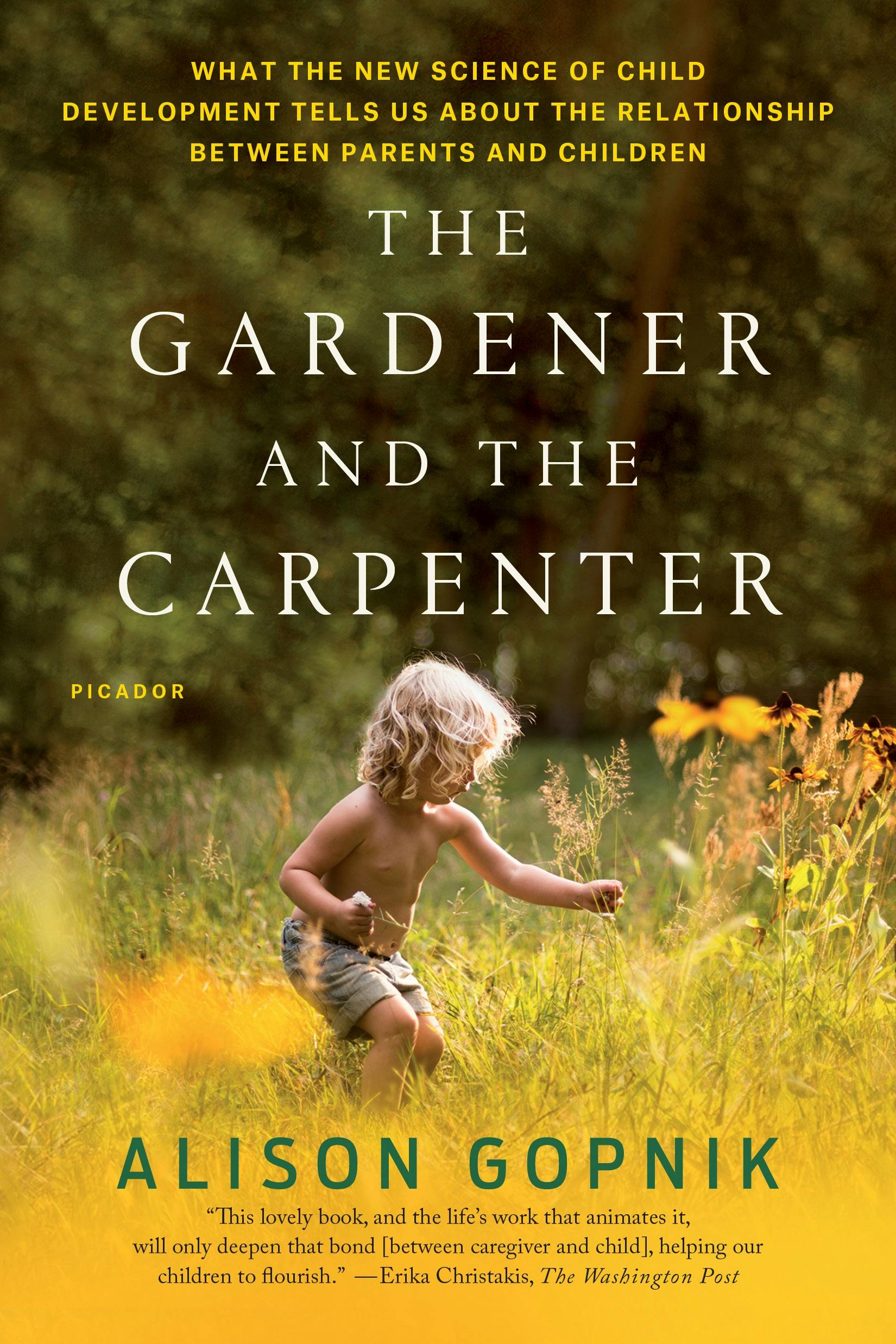
The Gardener and the Carpenter
In The Gardener and the Carpenter, Alison Gopnik, one of the world's leading child psychologists, illuminates the paradoxes of parenthood from a scientific p...
En bref
Ajouté le
7 mars 2026
Situation associée
Public
parent
Niveaux scolaires
Maternelle–12e année (Terminale)
Type de page
Book
Introduction
The Gardener and the Carpenter: Challenging the "Parenting" Model
- Core Thesis: Author Alison Gopnik argues that the modern, prescriptive "parenting" model—which views raising children as a goal-oriented job aimed at producing a specific type of adult—is fundamentally misguided and harmful.
- The "Carpenter" vs. "Gardener" Metaphor:
- The Carpenter: Represents the current model where parents act as craftsmen attempting to shape a child into a specific "product" (a successful adult) through techniques and expertise.
- The Gardener (Implied): The alternative perspective, which suggests that parents should provide a protected, nurturing environment that allows children to grow and flourish in their own unique ways, rather than forcing a specific outcome.
- Critique of the "Parenting" Industry:
- There is a massive industry (e.g., 60,000+ "how-to" books on Amazon) that promotes the idea that specific techniques can guarantee a child's success.
- This model creates unnecessary guilt, anxiety, and "mommy wars," forcing parents to choose between their careers and their "job" as parents.
- Scientific and Philosophical Perspective:
- Gopnik, a developmental psychologist, notes that professional expertise does not provide clear answers to the complexities of raising children.
- The "parenting" model fails to account for the reality that children often turn out differently than their parents' efforts would suggest (e.g., children from difficult backgrounds thriving, or children of "good" parents struggling).
- Biological and Social Significance:
- The long, helpless period of human childhood is a defining evolutionary trait.
- Caring for children is not just a private, domestic task but a fundamental community and political project.
- The author argues that we need to move beyond the binary of "how-to" manuals and "wry memoirs" to a deeper understanding of the human condition.
- Key Takeaway: The "parenting" model is an unsatisfactory way to view the relationship between parent and child; instead, we should view the care of children as a vital, evolving social and biological responsibility that transcends the goal of "producing" a specific type of person.
Ci-dessous : site officiel et informations éditeur issues des fiches, avant d’ouvrir le site.
Site web
Avis de la communauté
Pas encore d’avis publiés. Soyez le premier à partager votre expérience.