Executive Function Skills - CHADD
Executive function refers to brain functions that activate, organize, integrate and manage other functions. It enables individuals to account for short- and long-term consequences of their actions and to plan for those results. It also allows individuals to make real-time evaluations of their actions and make necessary adjustments if those actions are not achieving the…
Overzicht
Toegevoegd op
8 maart 2026
Gerelateerde situatie
Doelgroep
parent
Schooljaar
Klas 1 (brugklas)–Klas 4
Paginatype
Article
Inleiding
Understanding Executive Function Skills
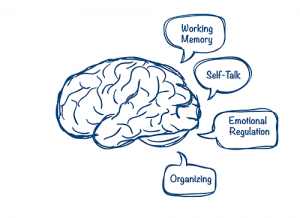
- Definition: Executive function refers to the brain's ability to activate, organize, integrate, and manage other cognitive functions, enabling planning, foresight, and real-time self-adjustment.
- Connection to ADHD: Executive function impairments are considered highly interrelated to ADHD symptoms, particularly regarding the inability to self-regulate and delay responses.
- Russell Barkley’s Model: Focuses on the root cause being an inability to self-regulate. He categorizes executive function into four areas:
- Nonverbal working memory
- Internalization of speech (verbal working memory)
- Self-regulation of affect, motivation, and arousal
- Reconstitution (planning and generativity)
- Tom Brown’s Model: Proposes six integrated "clusters" of executive function; impairments in these areas often appear together:
- Organizing, prioritizing, and activating for tasks
- Focusing, sustaining, and shifting attention
- Regulating alertness, sustaining effort, and processing speed
- Managing frustration and modulating emotions
- Utilizing working memory and accessing recall
- Monitoring and self-regulating action
- Impact: Deficits in these areas significantly hinder an individual's ability to initiate, maintain focus on, and complete tasks.
Hieronder staan officiële site- en uitgeversgegevens uit vermeldingen voordat u de site opent.
Website
- Site
- CHADD
Community-recensies
Nog geen gepubliceerde recensies. Deel als eerste uw ervaring.